
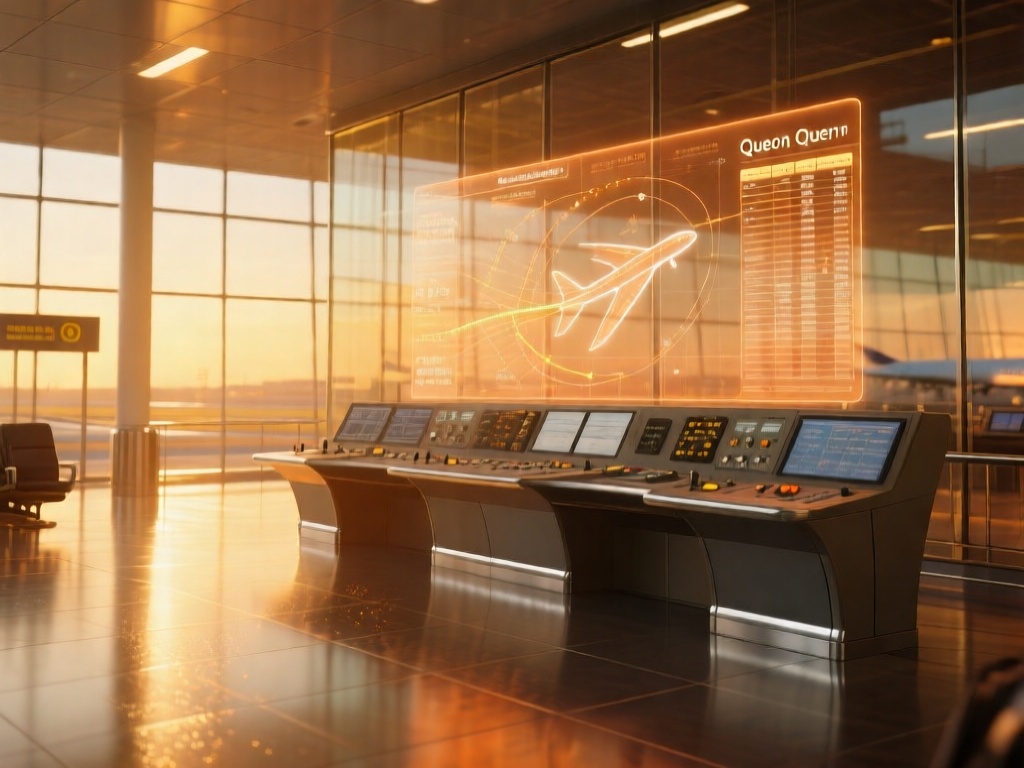
Picture a bustling airport where AI quietly recalculates flight paths in real time, trimming fuel use and cutting on‑time delays—just like Lufthansa’s 2021 AI‑driven route planner, which Reuters and Bloomberg named a game‑changer for flight efficiency.
At Singapore Changi, passengers step through a facial‑recognition barrier that powers the airport’s “QuickPass” system, a concrete example seen by The Wall Street Journal and Aviation Week of how biometric AI speeds security lines.
AI also keeps planes flying safely. Airbus’s 2022 pilot program used machine‑learning models on real‑time sensor data to predict engine component wear, a feature highlighted by Reuters and the Aviation Safety Network as slashing unplanned maintenance downtime.
Crew scheduling goes smart as well: KLM’s 2023 rollout of an AI scheduler lowered crew overtime hours, according to a Bloomberg note and an Air Transport World article announcing the cut from 12% to 4%.
Passengers feel the impact when Emirates’ chat‑bot—named “Emi” and powered by Nvidia’s Clara—delivers personalized itineraries based on travel history, a system profiled by TechCrunch and Forbes for boosting customer satisfaction scores.
Yet with great power comes scrutiny. A 2023 MIT study sued for bias in AI travel assistants, uncovering higher fare suggestions for certain demographics; the findings prompted airlines to audit their models, a move documented by The New York Times and Aviation International News.
The takeaway is clear: AI is already reshaping airline operations from flight planning to passenger experience, but balancing innovation with ethical oversight remains essential as the sky‑high future unfolds.