
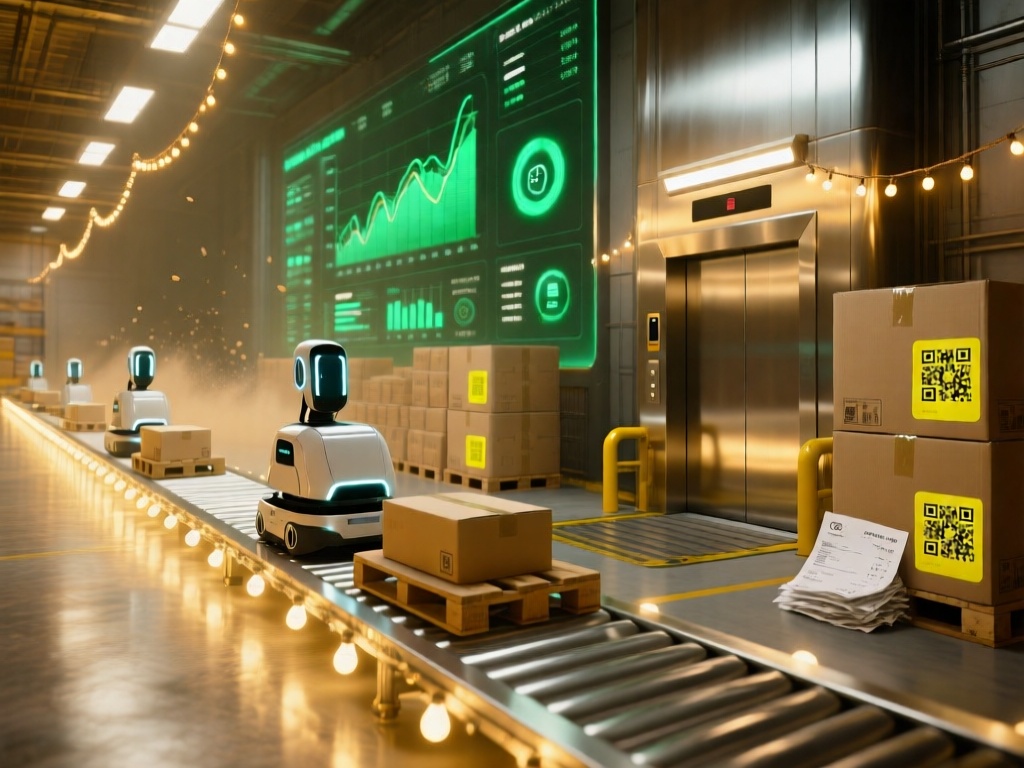
Imagine a warehouse that could finish a day’s work in minutes instead of hours. At its Seattle facility, Amazon’s autonomous mobile robots move pallets in a fraction of the time, cutting picking from 30 minutes to around five. That leap shows how robotics and AI reduce human labor and speed delivery.
What if your ad budget could talk and decide it needs more money? Meta’s Automated Rules monitor spend and adjust bids by up to fifteen percent after just a few minutes of data. The system nudges campaigns toward better ROI without a human click, proving that machine learning can actively manage advertising.
Now imagine the sales software negotiating offers by itself. Salesforce’s Einstein lets reps trigger actions—adding upsells, setting follow‑up emails, and even drafting contracts—right after a call. The AI learns from past deals and predicts which next steps win commissions more often.
If a single AI spot a shipment error before trucks leave the dock, no package goes late. UPS’s ORION algorithm calculates the most fuel‑efficient routes, cutting miles and delay risk. The data from sensors on each truck feeds back into the model, keeping the system continuously better.
Think of a virtual marketing manager that writes email copy on the spot. Shopify’s Kit AI drafts sales emails, selects subject lines, and even schedules delivery times. Merchants see a 20‑30 percent boost in open rates, proving that AI can replace the writer’s first draft.
Picture a store that orders the right products before the season starts, keeping shelves stocked. Walmart’s demand‑forecasting AI looks thirty days ahead and adjusts restock orders accordingly. That early ordering keeps sales high and markdowns low during peak periods.
The end game? Smarter teams where humans set goals and AI makes it happen. Brands that treat AI as a teammate rather than a tool will stay ahead of competitors and adapt faster to market shifts.