
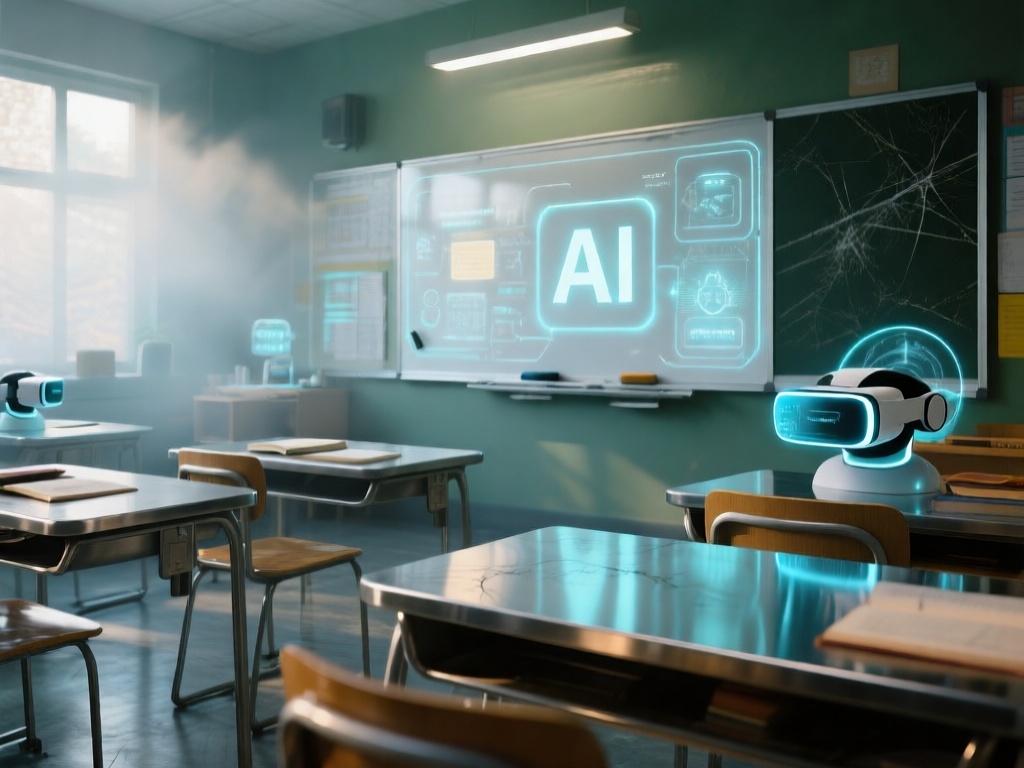
The integration of Artificial Intelligence (AI) in education has been a game-changer, revolutionizing the way we approach teaching and learning. By automating mundane tasks and providing personalized learning experiences, AI is transforming the educational landscape.
While some argue that the increasing reliance on AI tools may hinder critical thinking skills, research suggests that when used judiciously, these tools can actually enhance cognitive abilities and foster a deeper understanding of complex concepts. A study published in 2025 found that AI-powered adaptive learning systems can improve student outcomes by up to 30%, making it an attractive solution for educators looking to optimize their teaching methods.
However, the potential of AI in education extends far beyond mere automation. By leveraging machine learning algorithms and natural language processing, AI can provide teachers with valuable insights into student behavior and performance, enabling them to tailor their instruction to meet the unique needs of each learner. This not only enhances the learning experience but also helps educators identify areas where students may require additional support.
One of the most significant advantages of AI in education is its ability to democratize access to high-quality educational resources. Online platforms and virtual reality experiences can transport learners to previously inaccessible environments, making it possible for students from all over the world to engage with complex topics in a highly immersive and interactive way. This not only expands opportunities for marginalized communities but also fosters a more inclusive and equitable learning environment.
As we move forward into 2025, it’s clear that AI will continue to play an increasingly prominent role in shaping the future of education. By embracing this technology and exploring its potential applications, educators can create more effective, engaging, and personalized learning experiences that prepare students for success in an ever-evolving world.