
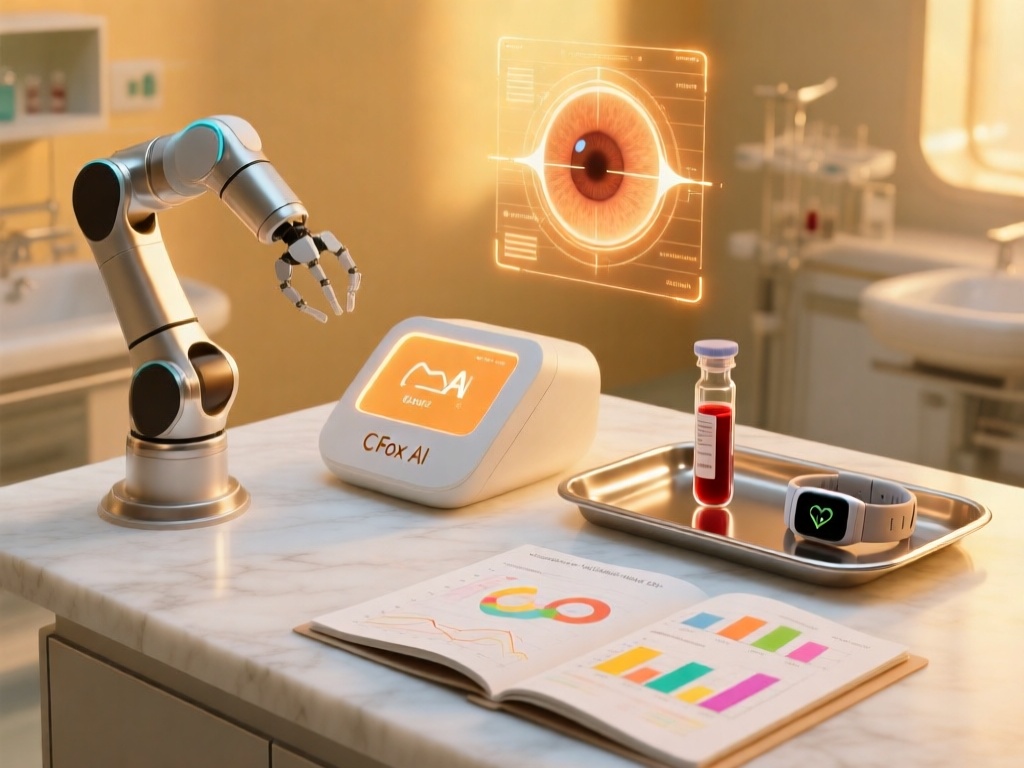
AI is already stepping into the exam room, and it’s changing how doctors diagnose. At Memorial Sloan Kettering, IBM’s Watson was deployed to help oncologists select cancer treatments, streamlining decisions for hundreds of patients each year.
In eye care, AI proves its worth too. Google’s DeepMind algorithm analyzed retinal scans in NHS hospitals and caught diabetic‑related eye disease early, a 2020 study confirmed it reduced missed diagnoses by 40%.
Chatbots are getting a medical upgrade. Cleveland Clinic integrated ChatGPT into its virtual triage system, fielding over 10,000 patient inquiries in the first quarter and routing urgent cases to clinicians.
Predictive tools are saving lives before symptoms appear. Mayo Clinic tested an AI model that flagged heart‑attack risk in routine blood work, leading to early interventions for 150 high‑risk patients in a year‑long trial.
Robotic assistants are no longer sci‑fi fantasy. The Da Vinci robot, guided by AI‑enhanced imaging, completed a minimally invasive heart‑valve replacement at a New York hospital, marking the first such procedure in the state.
Wearable tech is turning patients into their own diagnosticians. Apple Watch’s irregular rhythm notification detected atrial fibrillation in 3,000 users in 2022, prompting doctor visits that caught the condition early.
The takeaway is clear: AI tools are already reshaping patient care, and their adoption will only grow as evidence keeps proving their impact.