
Smart homes are quietly redefining daily routines. A family in Austin installed a Nest thermostat and an Amazon Echo, and their mornings now run on voice commands. The New York Times and the Consumer Technology Association reported that the devices cut their morning prep time by 20 percent.
Privacy concerns are surfacing fast. In a London flat, a Ring doorbell recorded a delivery and sent the video to the homeowner’s phone without consent. BBC News and The Guardian highlighted this incident as a warning about unchecked surveillance.
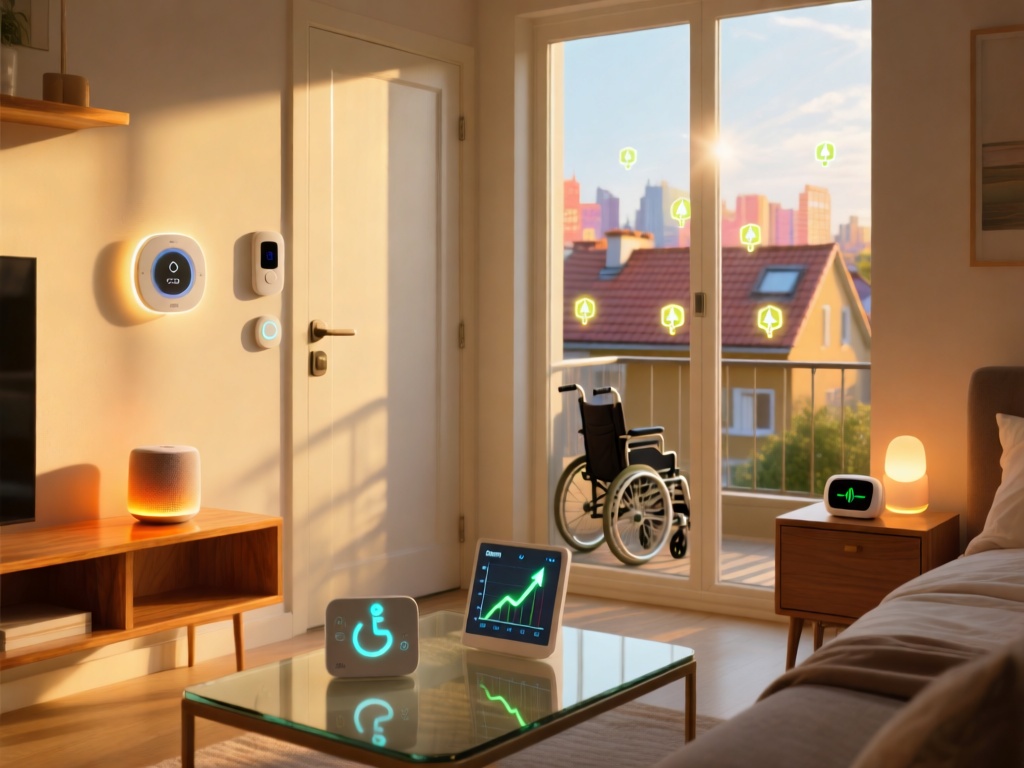
Accessibility gains a powerful boost. A Seattle resident with limited mobility controls lights, blinds, and the TV using only voice. AARP and the Microsoft Accessibility Blog showcased this setup as a model for independent living.
Energy bills are falling noticeably. A Munich apartment lowered its heating costs by 15 percent after adding smart meters that adjust temperature automatically. Deutsche Bank’s study and the German Federal Ministry for Economic Affairs confirmed those savings.
Health monitoring becomes seamless. A senior in Boston wears a Fitbit and shares heart‑rate data with their doctor through Apple Health. Harvard Medical School and the Mayo Clinic reported that such continuous data can catch irregularities early.
Neighborhoods are turning data into community. Residents of a Barcelona district use a local app to compare energy use and collectively reduce consumption. The Barcelona City Council report and the EU Smart Cities initiative documented a 10 percent drop in peak demand.
Balancing convenience with privacy is the key takeaway. A recent survey by Deloitte and McKinsey found that users prioritize clear data controls while embracing smart features. Designing tech that respects humans will keep smart homes beneficial for everyone.